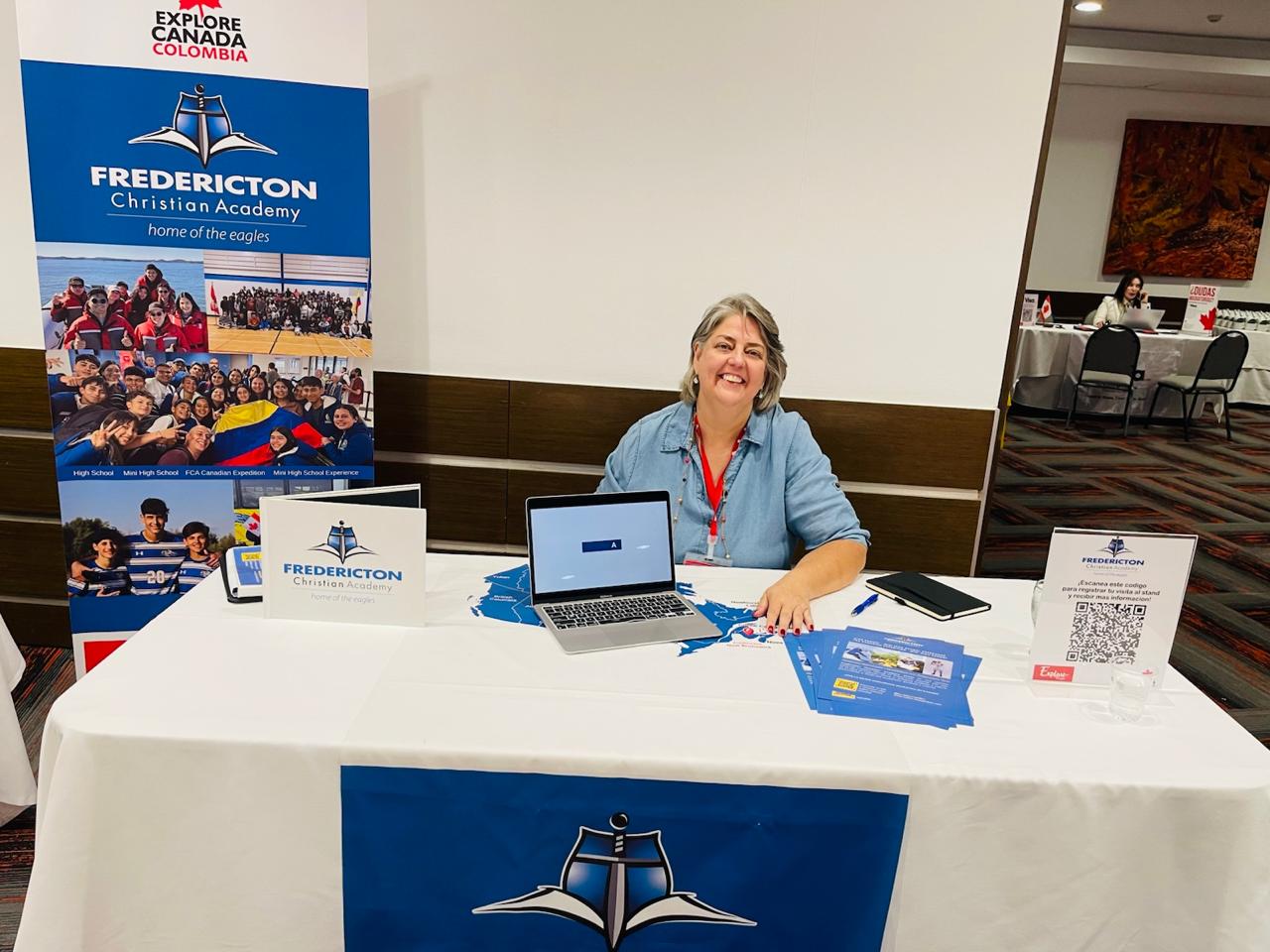
Mini High School Experience: What is it?
The Mini High School Experience 2026 offers an authentic Canadian secondary school experience in a compact format, while maintaining academic depth, daily interaction with local peers, and full exposure to English. Using an immersion approach, the program combines regular classes in up to five subjects chosen by the participant, ESL (English as a Second Language) sessions focused on real-world communication, cultural workshops, and winter sports.
Unlike vacation programs, the Mini High School Experience 2026 follows the same curriculum and daily schedule as FCA students, ensuring that participants experience academic expectations, assignments and projects, and in-class group dynamics. Day-to-day learning alongside approximately 95% Canadian classmates and a small group of international students from Europe, Asia, and Latin America creates a strong environment for intercultural exchange. This combination of academics, extracurricular participation, and homestay life supports English development, responsibility, and a broader worldview.
Program highlights
- Active learning: projects, presentations, and assessments aligned with what local students complete.
- Bilingual environment: optional exposure to French, New Brunswick’s second official language.
- Christian values: a focus on ethics, respect, and empathy—core pillars of Fredericton Christian Academy.
- International network: connections with Canadian students and international students from a range of countries.
- Support: a dedicated team that supports international students.
How does the Mini High School Experience work in Canada?
The Mini High School Experience is designed to replicate the routine of a Canadian secondary school student, with an optimized schedule that also includes dedicated time to explore local culture. During the week, students follow FCA’s official timetable, with classes from 8:30 a.m. to 3:00 p.m., Monday to Friday, plus extracurricular activities and daily transportation to and from the host family home in the morning and afternoon.
Fridays include an additional component: integration sessions focused on leadership, debate, volunteering, and Christian faith, supporting social-emotional and spiritual development. On Saturdays, the Mini High School Experience program organizes full-day trips, such as skiing at Crabbe Mountain or visits to the Beaverbrook Art Gallery. During Exam Week (the regular students’ exam week), the program shifts into an activity-focused schedule so participants can enjoy experiences such as tobogganing at Mactaquac Provincial Park or skating at Officers’ Square.
To provide language support, free daily ESL (English as a Second Language) workshops focus on all language skills, especially communication and pronunciation. This helps participants progress quickly without feeling overwhelmed. The entire schedule is supported by FCA guidance staff, teachers, and coordinators, who are ready to assist as needed.
Who can join the program?
The Mini High School Experience 2026 is recommended for:
- Students in Grade 9 through the final year of high school, or recent graduates who want international academic exposure before university.
- An intermediate level of English (B1) or higher is recommended, but there is no minimum requirement, as participants receive full support and free ESL classes.
- Students who are curious about new cultures, interested in the Canadian winter, and motivated to strengthen their English.
Why choose the Mini High School Experience in January?
Choosing January offers several advantages:
Well-aligned school calendars
The program timing can align well with school breaks across Latin America, allowing students to participate fully while minimizing disruption to their home-country school calendar.
Winter weather and seasonal activities
January in New Brunswick brings cold days and classic winter scenery. Participants can try winter activities such as ice skating and tobogganing, and enjoy local events in a warm, welcoming setting.
Small groups and personalized attention
FCA maintains a balance between Canadian and international students, supporting individualized guidance from teachers and coordinators and accelerating academic and language progress.
Flight options and simpler planning
Fredericton has an international airport about 30 minutes from the city, with daily flights and strong connections. In addition, FCA ensures that each Mini High School Experience participant is welcomed by the host family or a member of the FCA team, supporting a smooth arrival process.
Momentum for the new year
Starting the year in an international environment can boost motivation, support clear academic goal-setting, and build confidence and organization when returning to school at home.
What is the routine like at a Canadian school?
At FCA, each morning begins with Morning Assembly, a brief time for reflection when students receive guidance and academic goals for the day. On the first day of classes, participants receive a personalized timetable with up to five subjects from their pre-selected options. This detailed schedule ensures that each student knows exactly where to go and which classroom to attend.
Classes are organized in blocks that combine core subjects, ESL (English as a Second Language), and electives, encouraging active learning through projects, debates, and presentations. Lunch is brought from home. Students use that time as an additional opportunity to practise English with classmates and teachers.
After the academic day, extracurricular activities begin. Participants can choose clubs such as Robotics, Journalism, and Visual Arts, or sports such as soccer, volleyball, basketball, and even hockey. These options support social connection and language use in informal settings, building technical and social-emotional skills while strengthening relationships with local and international students.
Staying with host families: how does it work?
Host families are at the heart of the intercultural experience. Selected through interviews, home visits, and background checks, they receive training on cultural adjustment, nutrition, and first aid. All homes provide:
- A private room or a shared room with another international student.
- Wi-Fi for schoolwork and staying in touch with family at home.
- Three daily meals prepared with balanced eating habits in mind.
- Family support: participants experience family life. Daily routines vary from family to family, but sharing at least one meal together is common. Students integrate into the household and take part in conversations and activities.
- Daily transportation: the host family is responsible for transportation to and from FCA each day. These drives support the student’s integration and provide authentic language practice.
Which subjects do students take?
Each participant chooses up to five subjects, combining personal interests with new challenges. Some of the most popular options include:
- Languages: English, French (beginner to advanced), Canadian Literature.
- Math and sciences: Mathematics, Advanced Mathematics, Pre-Calculus, Physics, Chemistry.
- Social studies: North American History, Psychology, Geography.
- Sciences: Biology, Environmental Science.
- Arts and communication: Theatre, Music Production, Visual Arts.
- Technology and business: Digital Design, Programming, Entrepreneurship.
- Physical education: Ice Hockey, Basketball, Track and Field.
All classes are taught in English, and students also take ESL (English as a Second Language) sessions to strengthen their language skills and get more out of each subject.
English classes and ESL: what makes them different?
Every day, participants attend ESL (English as a Second Language) sessions focused on:
- Pronunciation & Listening: activities using music, podcasts, and simulations of real-life situations.
- Writing Workshop: development of essays, reports, and presentations.
- Grammar Clinic: personalized review of common errors when moving from Portuguese to English.
- Speaking Lab: debates, role plays, and speed conversations to build fluency.
Which extracurricular activities are offered?
FCA values well-rounded development and offers more than 20 clubs and teams so participants can explore different interests, practise English in informal settings, and build social-emotional skills. Key highlights include:
- Winter sports: skiing, snowboarding, curling, and ice skating, with specialized instructors for all levels.
- Performing arts: an annual musical project with classes in singing, acting, and directing, culminating in performances for the school community.
- STEM: Robotics Club, science fairs, and internal hackathons, where students design, build, and present technology solutions.
- Volunteering: regular visits to seniors’ homes, donation drives for food banks, and environmental preservation projects, reinforcing the Christian commitment to serving others.
- Leadership in Action: a workshop series on servant leadership grounded in Christian principles, building skills such as empathy, teamwork, and ethical decision-making.
Each club is supervised by teachers and coordinators, ensuring safety and academic support. Participation in extracurricular activities not only expands international connections, but also accelerates English development through practice in real-life situations.
Trips and excursions included in the program
The Mini High School Experience includes five special outings and three full-day excursions, carefully planned to combine fun, culture, and English practice:
Crabbe Mountain
A full day dedicated to skiing or snowboarding, with lessons for beginners and challenging runs for those with experience. Includes lunch at the lodge and time to enjoy the snow.
Frostival & Sleigh Rides
Participation in a traditional winter festival with lights, live music, and food trucks, followed by a horse-drawn sleigh ride through charming scenery.
Mactaquac Provincial Park
An afternoon of tobogganing and easy walks through snowy forests, ending with an outdoor campfire to enjoy hot chocolate and marshmallows.
Officers’ Square – Ice Skating
A skating session under colourful lights, with playlists selected by the participants themselves. Skates and safety equipment are included.
Beaverbrook Art Gallery & Clay Café
A guided visit featuring works by great masters such as Dalí and Turner, followed by a creative afternoon at Clay Café, where each student paints their own ceramic piece.
Kingswood Entertainment Centre
A full-day excursion to one of Atlantic Canada’s largest entertainment centres: bowling, laser tag, and racing simulators support team engagement.
These activities create memorable moments while encouraging English use outside the classroom, strengthening relationships among participants, and deepening understanding of local culture.
How does the program support English fluency development?
Investing in the Mini High School Experience 2026 means committing to immersion in a second language—an approach widely recognized as more effective than studying only in a classroom. Key factors that support strong outcomes include:
Daily practice in real-life contexts
Living, studying, and socializing in English turns everyday moments—from conversations at the dinner table to group projects—into ongoing learning opportunities. This consistent exposure supports vocabulary growth and the natural use of grammar structures.
Immediate, natural feedback
Teachers and host families help participants notice and improve pronunciation and usage in a natural way, supporting steady progress.
Confidence to use the language
Participating in daily situations—asking for information, presenting an assignment, or joining debates—builds independence and reduces the fear of making mistakes, strengthening confidence.
A variety of accents and registers
Learning alongside Canadian students and participants from other countries exposes students to different intonations and vocabulary, preparing them to communicate in international settings.
Active, motivating learning
Seeing progress reflected in real conversations supports sustained engagement, avoiding the monotony of traditional language courses.
Academic and future pathways impact
Stronger English proficiency can support opportunities for future study abroad, scholarship applications, and advantages in the job market, where bilingual and multilingual communication is increasingly valued.
Specialized support
Periodic updates on language development and personalized guidance allow families to follow progress closely.
In summary, the Mini High School Experience offers a structured immersion environment that supports meaningful English development in academic and daily-life contexts.
Benefits for future academic and career pathways
Participation in an international academic experience can create lasting impact on personal development, educational opportunities, and future pathways. Key benefits include:
- A standout academic profile: international experience strengthens a student’s academic record, signalling initiative and cultural openness. Universities and scholarships value candidates with experience in English-speaking environments.
- Soft-skill development: skills such as resilience, adaptability, and intercultural communication grow through new experiences—whether presenting work in another language or navigating everyday challenges.
- Global networking: relationships with Canadian educators and peers from different nationalities expand a student’s network. These connections can support references and future collaborations.
- A broader worldview: exposure to different education systems and cultures supports a global perspective, relevant for careers involving international teams and markets.
- Preparation for future challenges: independence in organizing studies, transportation, and life with a new family supports confidence and autonomy, and introduces students to new learning methods and educational technologies.
Investing in the Mini High School Experience 2026 is an effective way to support academic growth and build a competitive profile early on.
What makes Fredericton Christian Academy unique?
Founded in 1978, Fredericton Christian Academy brings more than 45 years of tradition in excellent education rooted in Christian values. Key differentiators include:
Christian tradition with openness to diversity
FCA is grounded in faith-based principles, ethics, and empathy, while welcoming students from different backgrounds and beliefs and promoting mutual respect across all activities.
Small class sizes and individualized attention
With a limited number of students per class, each participant receives academic and well-being support from certified teachers and dedicated coordinators.
Authentic bilingualism
Located in New Brunswick, Canada’s only officially bilingual province, FCA offers daily exposure to English and French, preparing students for multicultural contexts and expanding language skills.
Integration with host families
The host families (homestay families), members of the school’s Christian community, are selected, trained, and supported through FCA’s homestay process, supporting a welcoming environment, consistent language use, and safe care.
Flexible, innovative curriculum
Participants choose up to five subjects across areas such as Science, Arts, Technology, and Languages. The combination of traditional methods, interdisciplinary projects, and English as a Second Language workshops supports academic development.
A strong extracurricular offering
With more than 20 clubs and sports teams—from robotics and performing arts to winter activities—FCA supports social-emotional skills, language practice in real situations, and integration among participants.
Together, these elements create a safe environment with intellectual stimulation and personal growth, making Fredericton Christian Academy a strong fit for international students seeking meaningful immersion in Canadian secondary education.
Safety and support for our students
The safety and well-being of all students are priorities at Fredericton Christian Academy. To meet the needs of students coming from abroad, we offer:
- A dedicated international student department, with directors, mentors, monitors, and a homestay management team focused on supporting each stage of the experience.
- A multilingual team in Canada, along with our LATAM support team providing remote assistance as needed.
- A calm, welcoming city: Fredericton is recognized for low crime rates and the hospitality of the local community, providing a safe environment to live and study.
- Health insurance included, covering appointments, emergencies, and hospital transportation, supporting peace of mind for families and students.
With this specialized support structure, international students are supported throughout the program and can focus on learning and engagement with confidence.
How does the program build participants’ self-confidence?
The Mini High School Experience includes structured challenges that encourage students to expand their comfort zones and identify new strengths. It supports self-confidence through:
- Overcoming language barriers: presenting in English and joining debates helps students recognize progress and communicate with greater ease.
- Shared accomplishments: collaborative projects and presentations create a sense of achievement that supports confidence and new goal-setting.
- A welcoming home environment: daily life with trained host families provides consistent support that encourages independence and strengthens belonging.
- Constructive feedback: teachers and mentors highlight strengths and set improvement goals, turning incremental progress into meaningful momentum.
- A culture that treats mistakes as learning: recognizing that mistakes are part of learning supports healthy risk-taking and resilience.
With this combination of challenge, support, and recognition, students return with strengthened self-confidence and readiness for future academic and personal goals.
Differences between the Mini High School Experience and other programs
The Mini High School Experience 2026 offers a distinct combination of academics, cultural immersion, and structured extracurricular programming. Key differences include:
Timing and special programming
The program runs in January. One week is dedicated to activities and excursions while local students sit exams. This is the only period when participating students follow a different itinerary.
Mini High School (4 to 12 weeks)
A shorter version of Canadian secondary education, with classes and activities, but without all of the excursions and events created specifically for Experience participants.
High School Semester (5 months)
A longer academic immersion with full integration into the local curriculum, but without the winter agenda and without the week of special outings.
High School School Year (10 months)
A full stay to earn academic credits. Grade 12 students can take the Coop program, an international work placement program during secondary school. It is designed for students who want to complete secondary school in Canada or meet diploma recognition requirements in their home country. Events, excursions, and activities are distributed throughout the school year.
Summer Camp – FCA Canadian Expedition (3 weeks in July)
A summer like no other! You will travel through four provinces and cities such as Toronto, Montréal, Ottawa, and Québec City, among others. FCA’s new Summer Camp offers activities, trips, and classes with fun, practical (hands-on) projects over three weeks in the heart of the Canadian summer.
The Mini High School Experience is a differentiated offer: authentic Canadian secondary school participation, English development through immersion, and structured programming aligned to strategic points in the local academic calendar.
Which documents are needed to enrol?
To secure a place in the Mini High School Experience, students must have the following basic documents before meeting with the consultant:
- A valid passport, with an expiry date at least six months after the end of the program.
- An academic transcript, to support appropriate placement.
- The FCA application form, completed with personal and academic information.
- Program details, supporting documentation, and next steps will be provided by the consultant during the personalized meeting.
How does integration with local students work?
Interaction between participating students and Canadian students happens naturally throughout the day, including:
- Classes and group projects: mixed groups that support collaboration through debates, presentations, and interdisciplinary activities.
- Shared Morning Assembly: a daily moment that reinforces values and welcomes the school community with reflections and updates.
- Lunch and breaks: where English—and, at times, French—communication happens organically, supporting vocabulary growth and peer relationships.
- Mixed sports teams: such as basketball and hockey, where students participate alongside local classmates, supporting confidence and teamwork.
- FCA Ambassador Program: a support program that pairs each international student with a Canadian student, helping with questions, navigation, and social connection.
- Extracurricular activities and volunteering: shared participation in robotics, performing arts, and community initiatives that strengthen intercultural relationships.
This structure supports authentic day-to-day participation in Canadian secondary school life, with meaningful connections and consistent opportunities to practise English.
Do you need advanced English to participate?
To join the Mini High School Experience 2026, an intermediate level of English is recommended. The program supports students who are still developing their language skills by offering:
- Enhanced ESL classes twice a week, with a focus on pronunciation, writing, and conversation.
- Ongoing support from native-speaking teachers and bilingual mentors to address questions in and out of class.
- Daily practice in class, with the host family, and in extracurricular activities, accelerating language development.
Advanced proficiency is not required because the program is structured to support participants from day one, ensuring that intermediate-level learners can engage meaningfully in classes and activities.
What are the enrolment dates and deadlines?
Enrolment for the Mini High School Experience 2026 is open until October 31, 2025, or until spaces are filled, as published by FCA. Since spaces are limited and may fill before that date, we recommend securing participation as early as possible.
After submitting the enrolment form, our consultant will contact you to schedule the online interview and provide guidance on the deposit. Please ensure the passport, translated academic transcript, and the other documents listed above are prepared before speaking with the consultant to support an efficient process.
How can you secure a spot for 2026?
To secure a spot in the Mini High School Experience 2026, the first step is to complete the expression of interest form. Once we receive your information, a consultant accredited by FCA through one of our partner agencies across Latin America will contact you to present the program in detail, including fees, deadlines, and required documents. During the meeting, payment options and possible instalment arrangements will be explained transparently. You then follow the consultant’s guidance to submit the requested documents and finalize enrolment, confirming participation with clarity and confidence.
Which documents are needed to start enrolment?
To begin the process, it is important to gather basic documents such as a passport valid for at least six months after the end of the program and a recent academic transcript. If a passport is not yet in place, there will be time to apply, and the FCA-accredited consultant will guide each step, including the visa process. During the meeting, the consultant will send the complete document list, explain accepted formats, and provide support throughout the process to ensure clear next steps.
What should you pack for your program in Canada?
We know “what to pack” is often one of the biggest questions before travelling. It is helpful to include versatile clothing for Fredericton’s weather, such as light jackets and thermal layers (base layers), as well as a standard Canadian or universal plug adapter, and liquids in containers of up to 100 mL. Some ongoing medications must be carried with a prescription, and it can be useful to bring a few small items from home as gifts for the host family and new friends. In addition, families receive a dedicated checklist and a practical packing guide aligned with general airline requirements, including recommendations for documents, medications, electronic devices, and souvenirs.
How can parents and guardians follow the experience?
During the Mini High School Experience, parents and guardians will have access to an exclusive WhatsApp group managed by the team and LATAM monitors from Fredericton Christian Academy. In this space, the team shares daily routines, photos, and videos from outings, along with important reminders, supporting transparency about what takes place on campus and during excursions. At the end of the program, a report is shared by email and/or WhatsApp with grades, participation in activities, and notes on each participant’s progress.
If questions arise during the program, there are multiple communication channels. The consultant from the partner agency in the student’s home country provides support and liaises with the school when needed. For emergencies, FCA’s international student department directors maintain a direct English-language line, available 24 hours a day. The LATAM team provides additional support during business hours, while host family contacts remain available for day-to-day updates related to routine and student well-being.
Why is the Mini High School Experience 2026 a first step toward studying abroad?
The Mini High School Experience 2026 was created to offer a focused period of academic participation, integration, and lived experience through immersion. Participants follow an authentic Canadian secondary school routine, live with a host family from the Christian school community, and use English across daily activities. Structured outings, recreational programming, and shared community experiences support confidence in speaking and reinforce learning through practical application.
With more than 45 years of tradition, Fredericton Christian Academy promotes values of faith, respect, and academic excellence. Highly qualified teachers work with small groups, supporting individualized attention and ongoing feedback. The blend of innovative approaches and Christian principles creates an environment where intellectual growth aligns with character development.
Spaces are limited to preserve program quality and ensure close support from the school team. Complete the expression of interest form to receive contact from an accredited consultant through our partner agencies. Secure participation in an experience that can support future international education pathways and lasting personal growth.